
HERITAGE
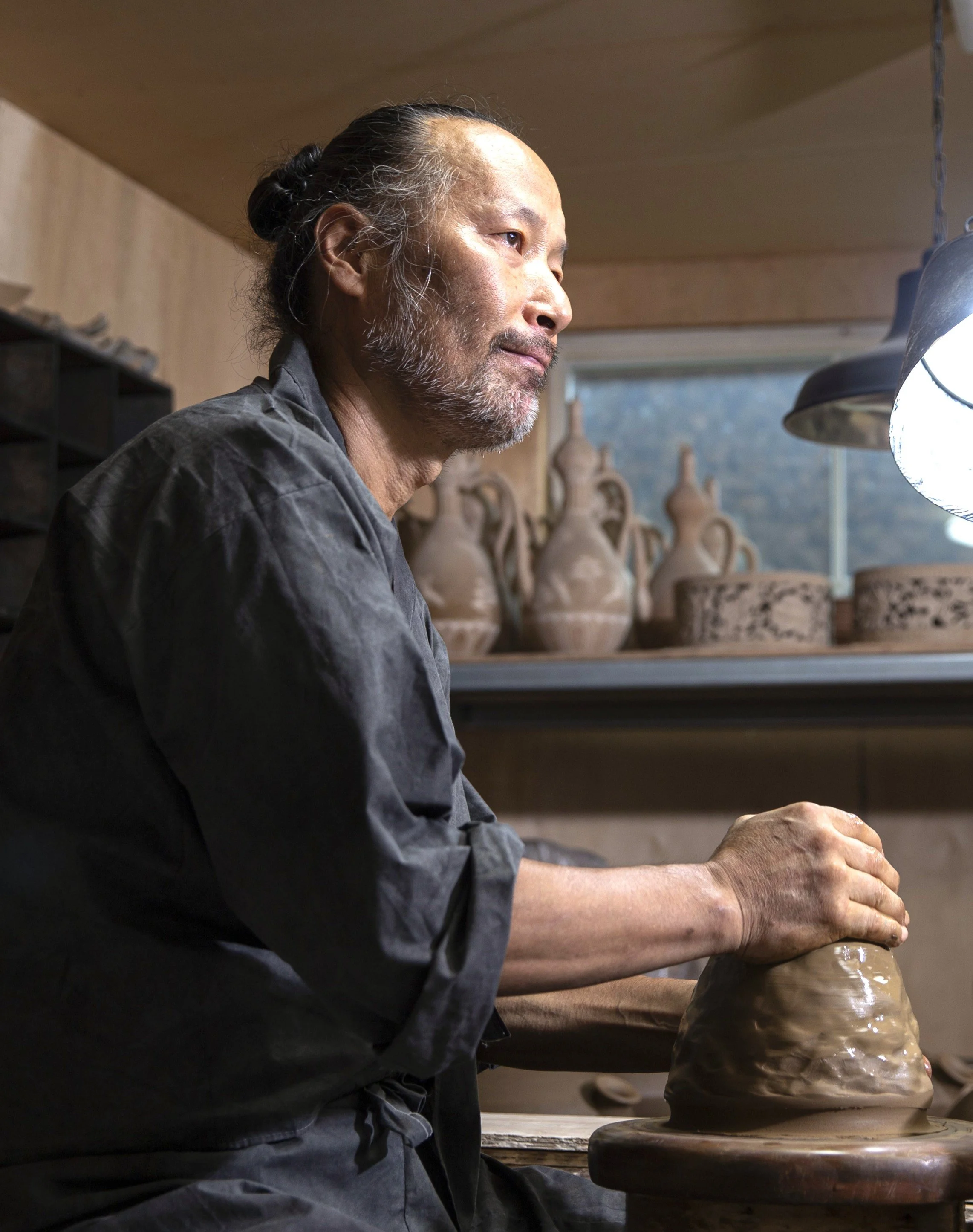
Master Im Kyungmoon (Yocheon 窯闡)
Founder & Master of Hwasimdoyo
With the Heart of
Ancient Potters
“For over 40 years since beginning his journey in pottery, Master Im Kyungmoon has dedicated his life to researching and recreating the production techniques of Korean ceramic artifacts. Having inherited his skills from masters who continued the lineage of the legendary last potters of the Joseon Dynasty, he continues his endless research to resurrect the crafting methods of Celadon, Buncheong, and White Porcelain that had been lost to history.”
Preserving the Essence of Handcraft
Most modern materials, such as clay and glaze, are mass-produced for the convenience of gas and electric kiln firing. However, realizing that the true beauty of ancient ceramics is born only in the extreme heat of a wood-fired kiln, Master Im Kyungmoon insists on preparing every process himself, just as the ancient potters did.
He believes that uncompromising handcraft is the only answer—from mixing the clay and formulating the glaze, to throwing on a traditional kick-wheel and carving in traditional styles. The natural hand marks left by the kick-wheel and the meticulous cutting of firewood tailored for the wood-fired kiln are all absolute prerequisites for completing the beauty of traditional ceramics. Furthermore, he has continuously repeated countless trials and studies to find the perfect blend of clay and glaze that can withstand extreme firing temperatures and most closely replicate the colors of traditional artifacts.
The Wait of Fire and Clay, 9 Days of Perseverance
Hwasimdoyo's ceramics must silently endure the roaring flames of a wood-fired kiln for a long time—three days of bisque firing followed by six days and nights of glaze firing. Only after passing through this grueling process is the artwork finally completed, bearing the profound beauty of ancient pottery.
During the firing period, Master Im constantly guards the kiln, controlling every degree of the fire. Without any modern thermometers, it is a fierce process of governing the kiln by feeling the color and heat of the flames with his entire body.
Hwasim-ri, Wanju: The Ancient Sanctuary of Potters
Located in Hwasim-ri, Wanju, where Hwasimdoyo stands, lies a terrain called 'Sagitjanggol' along the Mandeoksan Mountain range. With discovered kiln sites ranging from 12th-century Goryeo Celadon to 14th-15th century Buncheong, this place was a historic village where the history of Jeollabuk-do potters breathes. Even now, despite many relics and kiln sites being damaged by reckless modern development, fragments of ancient pottery buried in the earth inevitably wash down whenever it rains.
Born and raised near this area, and having later entered the path of pottery to complete 20 years of arduous learning and solitary research, Master Im returned to this sacred land densely populated with ancient kiln sites to establish traditional Hwasimdoyo. He continues their broken lineage by using the exact same water and earth that the ancient potters used hundreds of years ago.
Passing the Legacy to the World
Currently, based on his fully matured skills, Master Im is pursuing his artistic endeavors more earnestly than ever. He also places deep importance on communicating with the public through SNS and various local activities, and fostering the next generation. In particular, he is dedicated to sharing the profound, unique beauty of Korean ceramics with the world and nurturing apprentices who will fully understand, follow, and carry on this method. Showcasing the great technical prowess and artistry of the potters from the Korean Peninsula to the world—that is the path Hwasimdoyo and Master Im Kyungmoon are walking.